

DLSS 4 Multi-Frame Generation vs FSR 4: The Ultimate Upscaling & Latency Showdown
💡 Key Takeaway: DLSS 4 vs FSR 4 Verdict
How do DLSS 4 and FSR 4 compare in 2026? NVIDIA’s DLSS 4 Multi-Frame Generation leverages 5th-Gen Tensor Cores to synthesize up to 3 intermediate frames per rendered frame, driving 4K ray-traced frame rates up to 2.5x higher while maintaining sub-15ms system latency via NVIDIA Reflex. AMD’s FSR 4 introduces full AI-driven neural upscaling on RDNA 4 accelerators, narrowing the visual quality gap with zero ghosting on fine particle effects and providing open-source driver integration across legacy RX 7000 and competitor GPUs.
Image Reconstruction Quality at 4K
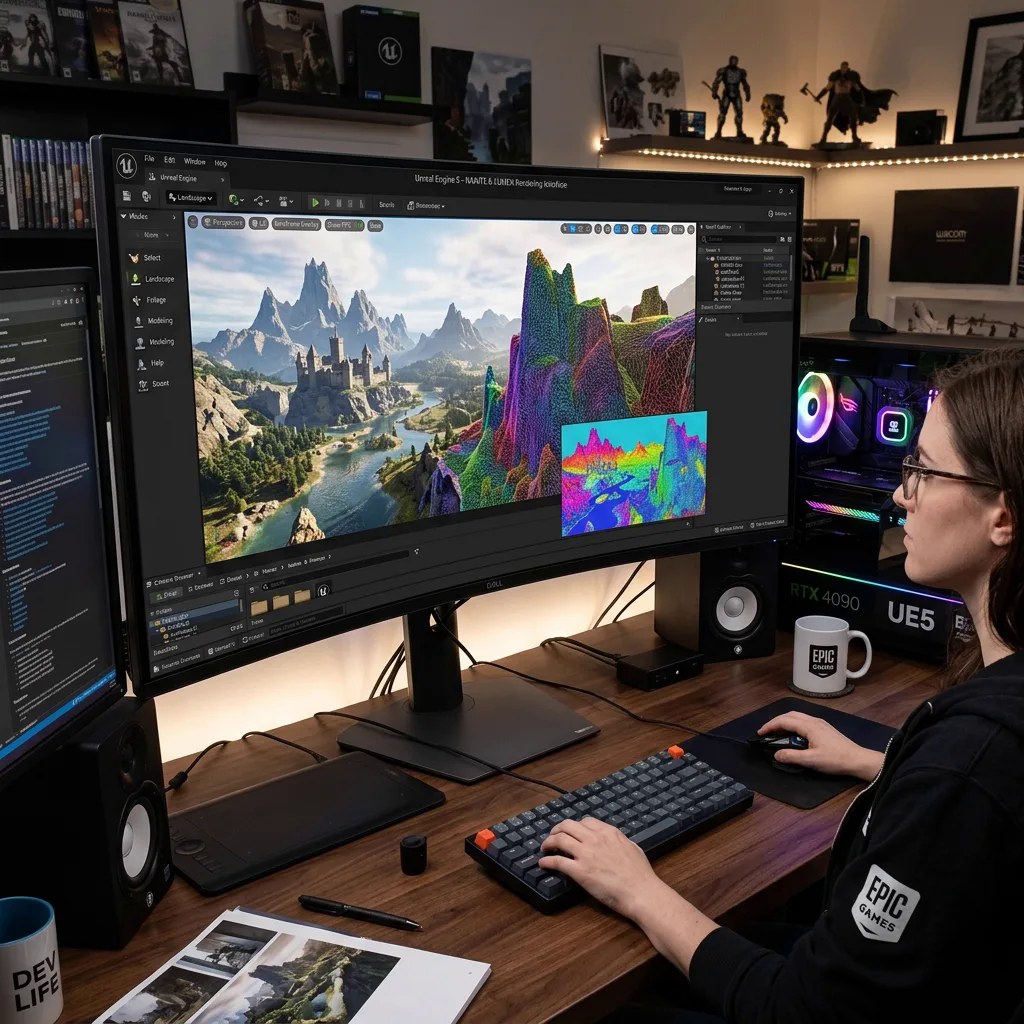
In high-frequency geometric scenes (such as foliage, fences, and motion particle effects in Unreal Engine 5.5), DLSS 4’s transformer-based motion vector model produces sharper temporal stability. FSR 4 marks AMD’s transition from spatial lanczos filtering to ML-based temporal reconstruction, eliminating the flickering artifacts seen in older FSR 2/3 implementations.